WHAT HAPPENED AT CHUNUK BAIR?
In August, the allies decided upon a plan to break the stalemate.
Late on August 6, New Zealanders marched out of Anzac Cove with the goal of taking the strategically significant peak known as Chunuk Bair.
After a night of tough climbing, on the morning of August 7 the Auckland Battalion pushed on to the Pinnacle, a ridge just below Chunuk Bair. In the struggle for the Pinnacle, some 227 New Zealand lives were lost, including 78 from the Auckland Infantry Battalion, 75 from Canterbury and 46 from Otago.
In the midst of the battle, the Wellington Battalion Commander, Lieutenant Colonel William Malone refused to send his men to their slaughter and resolved to press for Chunuk Bair at night.
A naval barrage early on August 8 virtually cleared Chunuk Bair of the Ottomans and the Wellingtonians took the ridge virtually unopposed. However, it was difficult to defend and the Ottomans were on the counter attack by 5am. A day of fierce fighting followed with a total of 424 New Zealand lives lost. The Wellington Infantry Battalion - spared from the heaviest fatalities the day before - lost 296 men in a single day. It was by far the worst day of the Gallipoli campaign for New Zealand fatalities.
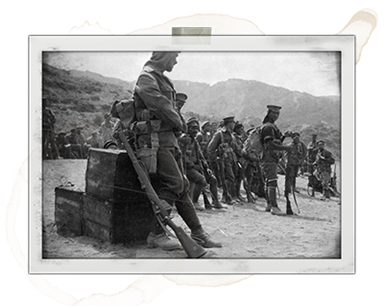
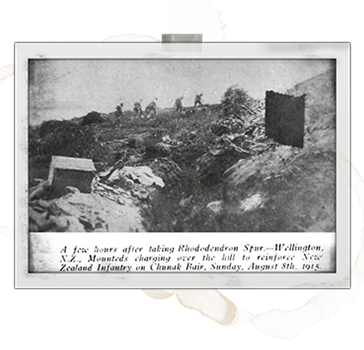
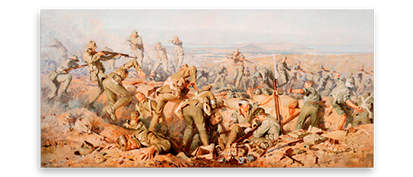
On August 9, the exhausted men holding Chunuk Bair faced third consecutive day of fighting. Attempts to send in reinforcements against a fierce Ottoman counter-attack faltered and the New Zealanders suffered further casualties. Those that remained of the New Zealanders fell back in the early hours of August 10.
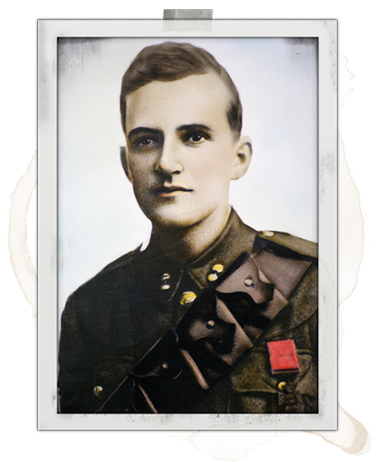
During the battle, Victoria Cross winner Cyril Bassett - along with a handful of companions - laid and subsequently constantly repaired a telephone wire to the front line in broad daylight and under continuous and heavy enemy fire. Although he wasn't wounded, two bullets passed through the fabric of his uniform. He was modest about his actions, saying "it was just that I was so short that the bullets passed over me".
But the way men died at Chunuk is shaping the deeds yet to be done by the generations still unborn. When the August fighting died down there was no longer any question but that New Zealanders had commenced to realise themselves as a nation.
Stretcher-bearer Ormond Burton.